How Much Does 24/7 In Home Care Cost in Anchorage Alaska?
As Anchorage seniors age, many look for in-home care in Anchorage Alaska so as to age in place for as long as possible. Many have grown accustomed to the freedom and independence afforded by living in their homes, surrounded by the comfort of years of memories. Despite all these advantages aging adults cannot always live alone in their own homes as medical care needs increase. Without assisted help, options in the form of in-home care from friends, family, or a hired service, aging seniors may not be able to accomplish their day-to-day tasks in a safe and healthy manner.
While there are many advantages to in-home care such as personalized care, companionship, assistance with daily chores, assistance with personal hygiene, and assistance with meals, it is essential to note that each of these advantages often comes at an added cost. To truly determine whether assisted living is a better alternative for your senior loved one such as Baxter Senior Living, it is necessary to add up all of the costs associated with in-home care.
The Cost of 24/7 In-Home Care
The cost of in-home care is generally decided based on the number of hours a designated care worker needs to spend with your senior loved one. These hourly charges are added to any other fees associated with skilled nursing services or other activities and needs that are not part of the contract, such as supplies needed to ensure your family member’s health and safety.
Not surprisingly, every state has its own median cost of care and a list of charges associated with in-home health care for seniors. According to a survey conducted by Genworth Financial, the national average is approximately $4000 per month. The same survey also shows that the median hourly rate across the country is roughly $20.00 per hour. This survey information is from 2015, so these rates have likely changed since then. As with many things, some states are more expensive than average while others charge well below the median hourly rate.
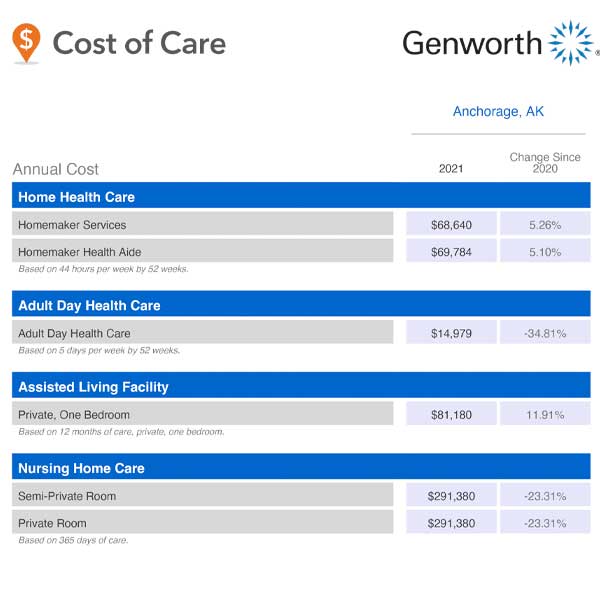
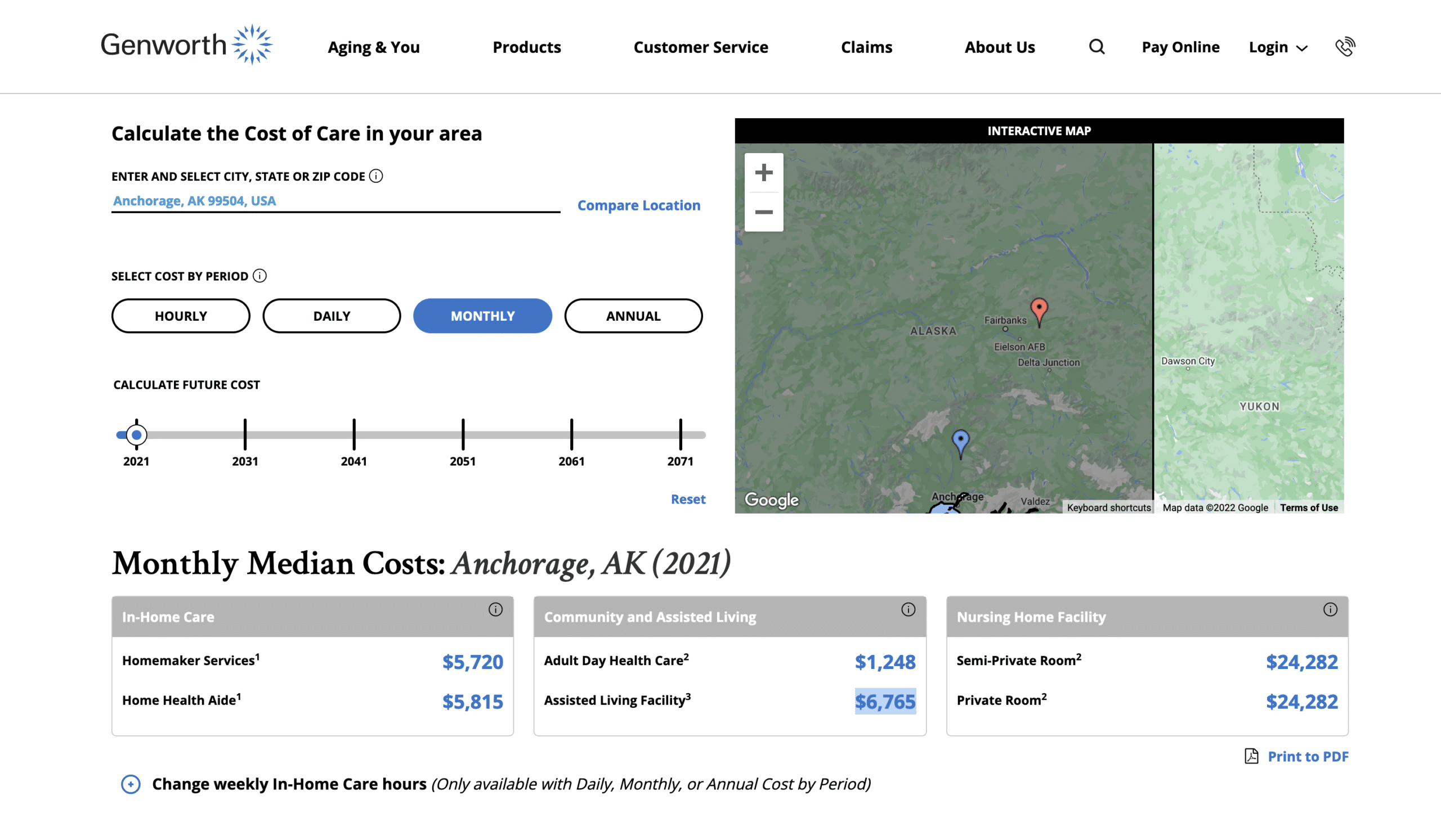
The Genworth survey shows yearly median rates for senior in-home care in Anchorage is averaging $5815.00 per month. As previously noted the actual rate you might pay for in-home care would depend on the number of hours your care worker needs to spend in the home as well as added costs for things like skilled nursing and supplies necessary to help your senior loved one remain comfortable, healthy and safe while they stay at home.
When you reach out to an in-home care agency regarding services, someone will likely come to conduct a comprehensive assessment of your senior loved one’s individual needs. Depending on the agency you choose and their policies, there may or may not be a charge for this service. In-home care costs are generally broken down in hourly rates, daily rates, or overnight rates.
Hourly Rates
Hourly rates are the most common way of determining how much you, as a client, will pay for in-home care. Seniors who are mostly independent in their day-to-day activities may not need a care worker around the clock, so their care needs are reduced. However, many in-home care agencies have established minimum hourly requirements per day that one of their licensed caregivers can be at a client’s home. In most cases, it is either two or four hours.
Daily Rates
Daily rates are those rates provided to senior clients who need help or care at all hours of the day. Rates are generally calculated on a daily basis as opposed to a monthly basis with allowances given for time when the caregiver takes breaks or rests. The daily rate for most in-home care services ranges from $200 to $350.00 per day, although this is dependent on the cost of living within your state and the amount of specialized care your senior loved one needs. As noted above, if your loved one needs skilled nursing care or care that requires medical procedures or administration of certain medications, in-home care may become financially out of reach. Under these circumstances, it may be more beneficial to consider an assisted living community such as Baxter Senior Living in Anchorage, AK, where such daily care requirements are part of our experienced nursing staff’s daily routine care.
Overnight Rates
Overnight rates are calculated differently than daily rates. A client can require overnight care while not necessarily choosing daily care services. Overnight clients are generally those seniors who need assistance from a professional at night because they get up frequently, or they have degenerative conditions such as Alzheimer’s or dementia and may wander off in the night. This option is commonly chosen among families who have been acting as the primary caregivers for their senior loved ones and have reached the point where they are no longer able to do so. The rates for overnight care vary depending on the agency but are typically calculated for a ten to twelve-hour window time. It is important to note that overnight care is calculated in addition to daily care. This means if you are hiring in-home care for your senior loved one and need services around the clock, you will be paying for a daily rate and likely an overnight care rate as well. Depending on the region in which you live, this could total well over $550 per day for your senior loved one’s care needs. In many cases, this total calculated cost well exceeds the daily care rate of an exceptional senior living community where 24/7 care services are provided for all residents.
How is In-Home Care in Alaska Paid For?
Depending on your financial situation or your loved one’s insurance coverage, there are several methods available to pay for in-home care services. The same methods are generally used to pay for fees pertaining to assisted living communities. These include:
Out-Of-Pocket Care Costs
Out-of-pocket care is where your loved one or family members choose to pay for the services on their own. Money for out-of-pocket payments often comes from employment, savings, or sometimes investments.
Insurance and Third Party Pay
Today, many insurance companies are offering policy add-ons that help to pay for in-home care services. Depending on your loved one’s insurance policy, there may be assistance to help cover their expenses. Third parties include state, local, and federal institutions such as Medicare, The Veterans Administration, and Medicaid.
While many seniors desire to obtain in-home care in Alaska throughout their Golden years, it may not be possible for all. Increasing medical needs and costs associated with skilled in-home care might make the ability to remain at home financially impossible. Also, as medical care needs increase, our senior loved ones’ ability to stay in their home and continue to maintain their health and safety sometimes becomes limited. In-home care may not always be the best or most desirable choice. Under many circumstances, an assisted living community such as Baxter Senior Living located in beautiful Anchorage, AK, offers all of the services afforded by in-home care and more. Residing in a senior community like Baxter opens up opportunities for socialization, recreation, and activities often above and beyond those available when seniors remain alone at home. If an assisted living community such as Baxter might be the best choice for your senior loved one, call us today for a tour. Let our experienced and caring staff show you why Baxter residents are some of the happiest in Alaska.